

Could it be more than picky eating?
Understanding ARFID and when to seek support.
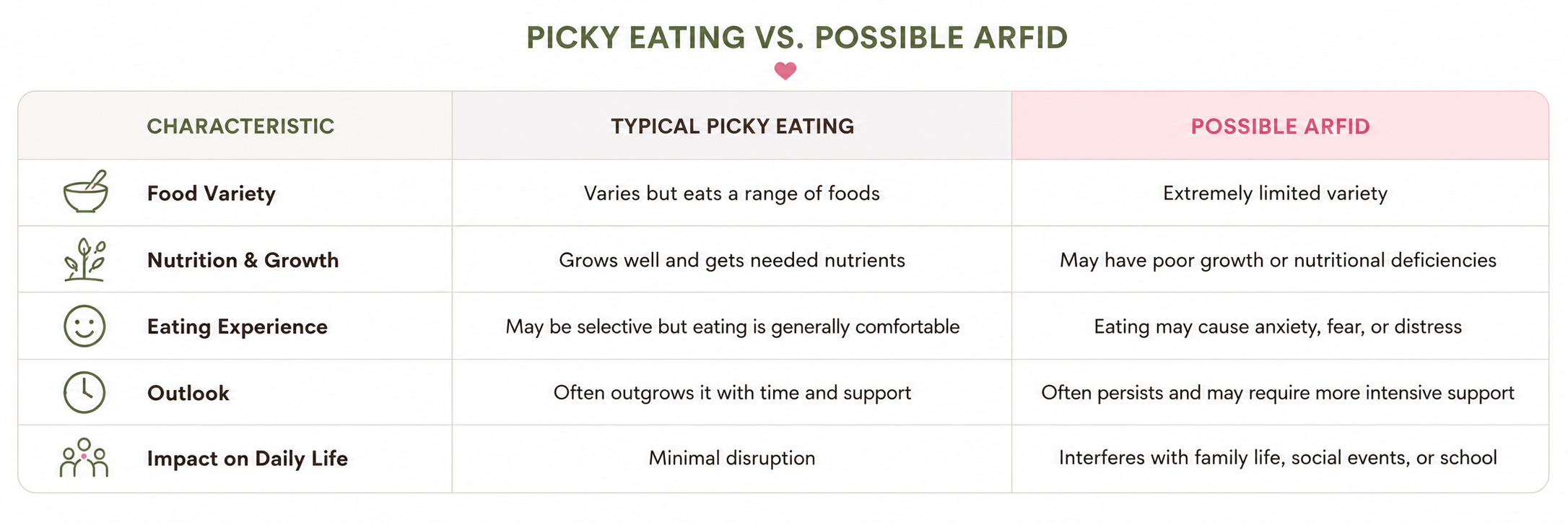
ARFID (Avoidant/Restrictive Food Intake Disorder) is more than simply being a picky eater. Early support can make a big difference in your child's health, confidence, and quality of life.
What is arfid?ARFID is a recognized eating disorder characterized by an eating or feeding disturbance that can lead to poor nutrition, weight loss, growth problems, nutritional deficiencies, dependence on supplements or tube feeding, and interference with psychosocial functioning.
* ARFID is not caused by "bad parenting or stubborn behavior. It is a complex condition-your child is not choosing to eat this way.
Common signs to look forExtremely limited variety of foods
Avoidance based on sensory characteristics (taste, smell, texture, color.)
Fear of choking, vomiting, or feeling sick
Low interest in eating or lack of hunger
Weight loss, poor growth, or nutritional deficioncies
Mealtime anxiety or distress
Avoiding eating with others or in social settings
*Every child is unique-signs can look different from one child to another.
Who does it affect?ARFID can affect children of any age. It is more common than many people realize, and early recognition and support can lead to better outcomes.
You're not alone.
We're here to help
How belly & mind can helpSome children referred to our clinic may show signs or characteristics consistent with ARFID. During our multidisciplinary feeding evaluations. we assess the medical, nutritional, oral motor, sensory, and feeding factors contributing to your child's eating challenges.
If concerns for ARFID or another eating disorder arise, we will discuss our findings with your family and help guide you toward the most appropriate resources and referrals.
WHEN WE RECOMMEND ADDITIONAL SUPPORT
ARFID often benefits from a team approach. Depending on your child's needs, we may recommend collaboration with: